Here is a situation I know a lot of eLearning teams will recognize. The pipeline is full, which is good news, until it is not. Three projects land in the same month, a client moves up a deadline, and suddenly the work on the table is more than the hours available to do it. You need help, and you need it to be good.
That is where an overflow development partner comes in. Someone you can hand work to when your plate is full, who delivers at your standard and hands it back ready to ship. When it works, it is one of the most valuable relationships a busy studio can have.
But not every partner is the right one, and the wrong choice can cost you more than doing the work yourself. So let me walk through what I would actually look for.
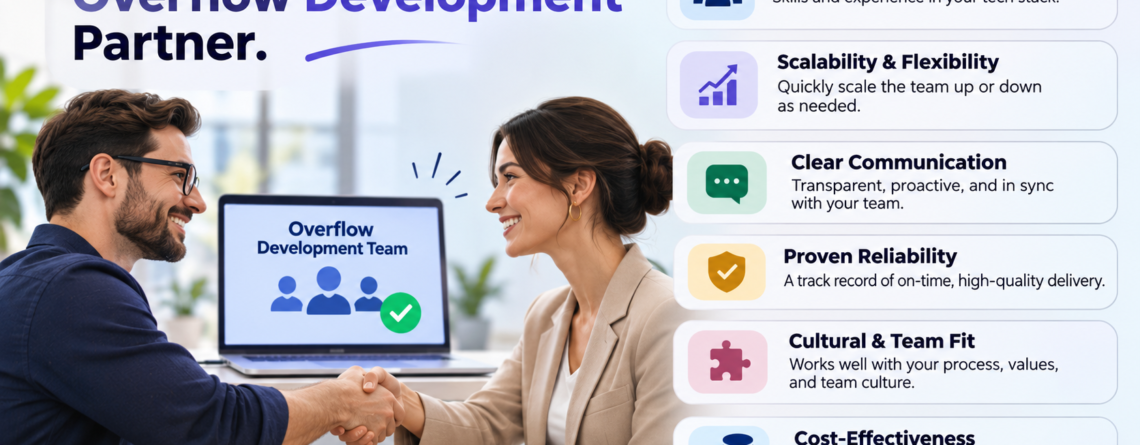
They Protect Your Standard, Not Just Hit a Deadline
The whole point of overflow help is that the work comes back good. Anyone can hit a deadline by cutting corners. What you need is someone who treats your quality bar as their own, because to your client, their work is your work.
A few signs a partner takes this seriously:
- They ask about your standards up front. Good partners want your style guide, your naming conventions, your usual review process. Silence on this is a warning sign.
- They catch their own mistakes. The work comes back already checked for alignment, typos, broken triggers, and timing. You should not be their proofreader.
- They flag problems instead of hiding them. If a source file is a mess or a deadline is unrealistic, you want to hear it early, not discover it at handoff.
When a partner protects your standard, you can put their work in front of a client without re-doing it. That is the entire value. Lose that, and you have just added a layer of risk to your own reputation.
They Fit Into Your Process, Not the Other Way Around
Overflow help only saves time if it reduces your workload. A partner who needs constant hand-holding, endless clarifying calls, or a brand-new process for every project is not actually lightening your load. They are just moving the work around.
The best partners slot into how you already operate. They take your files in the format you already use. They match the structure your clients already expect. They communicate in a way that keeps you informed without flooding your inbox. You should feel like you gained capacity, not like you picked up a second job managing someone else.
This is worth testing early with a small project before you hand over anything big. How much of your time did it actually take to get a good result back? If the answer is “almost none,” you have found something valuable.
They Are Discreet About the Arrangement
This one matters more than people expect. When you bring in overflow help, your client is trusting you. They do not need, and often do not want, to know how the work gets done behind the scenes.
A good overflow partner understands this completely. They work in the background. They do not reach out to your clients, put their own branding on your deliverables, or treat your project as a portfolio piece without asking. The arrangement stays yours to manage. You present the finished work as your own, because as far as the client relationship goes, it is.
If a potential partner seems eager to be visible in your client relationships, that is a mismatch. The right one is happy to stay invisible and let you own the relationship you worked hard to build.
They Are Reliable When It Counts
You usually call in overflow help precisely when things are tight. That means reliability is not a nice-to-have. It is the whole job. A partner who is brilliant but flaky is worse than one who is merely good and dependable, because the flaky one fails you exactly when you have no slack left.
Look for the boring virtues here:
- They are honest about capacity. A partner who says yes to everything will eventually say yes to something they cannot deliver. “I can take this, but not that, this month” is a good answer.
- They communicate before a deadline slips, not after. The worst surprises are the silent ones. You want a partner who raises a hand the moment something is at risk.
- They deliver what they promised. Not a rough draft when you asked for finished, not three slides when you agreed on ten. Dependability is just doing the thing you said you would do.
Reliability is hard to judge from a sales conversation. It shows up over time, which is another reason to start small and let a partner earn the bigger work.
Start Small and Let Trust Build
Here is the practical advice I would give anyone looking for this kind of partner. Do not hand over your biggest, most sensitive project to someone you have never worked with. Start with a contained piece of work, something real but low-risk, and watch how they handle it.
Pay attention to the whole experience, not just the final file. Were they easy to work with? Did they protect your standard? Did they make your life easier or harder? A small project tells you almost everything you need to know before you trust them with something that matters more.
The right overflow partner becomes a quiet extension of what you already do well. They give you the one thing a growing studio never has enough of, which is the ability to say yes to good work without burning yourself out to deliver it.
If you are looking for that kind of partner, someone who delivers at your standard, fits your process, and stays in the background so you can own the client relationship, that is exactly the role I am built for. You can always reach out to talk through your next custom eLearning project.